Zumper - Apartment Finder
- 4.7
- Rating
- 1.00M
- Installs
- Free
- Price

 Analysis by App-foxy
Finding a place to rent is rarely difficult because there are too few listings. The harder part is deciding which homes deserve your time, which applications are worth completing, and whether a promising apartment will still be available when you are ready to act. I tested Zumper as a practical rental-search tool, and I found that its main value is bringing the search and application process into one focused mobile experience rather than making you jump between unrelated sources.
Zumper is a free House & Home app from Zumper, Inc. It is available for Everyone and has grown into a familiar choice for renters, with more than a million installs and a 4.7 average from roughly 40 thousand ratings. Those figures suggest a well-established service, but they do not remove the need for careful checking. A rental app can help you organize a search; it cannot replace a viewing, a conversation with the property manager, or your own judgment about a contract.
How I judged the rental-search experience
I approached the app as someone with a real deadline rather than as a casual browser. The first question was not whether it looked polished, but whether it could help me narrow a large market without encouraging wasted applications. A useful rental app needs to make location, budget, home type, and move-in timing easy to manage. It also needs to show enough context around a listing for me to decide whether contacting the advertiser is worthwhile.
You May Also Like

 Pandora - Music & Podcasts
Pandora’s Music Is Easy to Start, but Harder to Recover
Pandora’s strength is its low-effort path from a seed to a station. Its weak spot is how much confidence it asks you to place in connection, setup, and quiet recovery.

 8 Ball Pool
 Is Built on Rivalries, Rematches, and Routine
A close look at the rivalries, rematches, shared routines, and unanswered safety questions that turn a quick pool match into a persistent mobile community.

 Samsung Music
’s Quiet Strength Is Playing What You Already Own
Its reach comes less from spectacle than from dependable access to a personal library. That simplicity is both the app’s strongest retention engine and its ceiling.

 AccuWeather: Weather Radar
AccuWeather Review: A Quick, Clear Forecast for Everyday Decisions
For everyday plans, the best forecast is the one you can understand quickly. AccuWeather makes rain timing, radar, and local conditions easy to act on, with a few trade-offs.

 Hill Climb Racing
Why Hill Climb Racing Still Turns Crashes Into One More Run
A tiny car, a bumpy hill and one more upgrade: Hill Climb Racing keeps resurfacing because its simple chaos makes every near-miss feel personal.

 AliExpress - Shopping App
AliExpress Makes Global Shopping Feel Personal, but Shoppers Bear the Risk
AliExpress turns a global marketplace into a pocket-sized discovery engine. Its reach is useful, its shopping loop compelling, and its trade-offs easy to miss.
More From Our News Desk
View All News


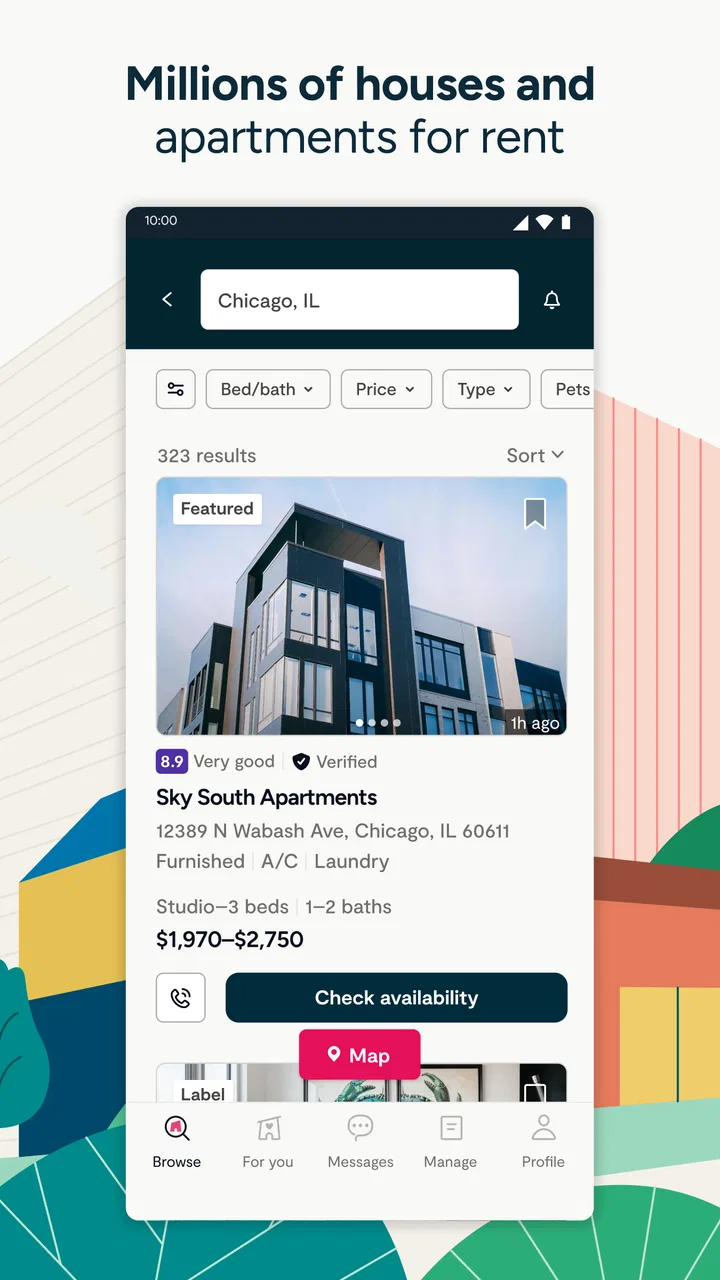
The second decision criterion was workflow. Searching is only the beginning. Renters usually need to save possibilities, compare them later, contact a listing, and eventually provide information for an application. Zumper’s appeal is that it is built around that complete journey. The store describes it as a way to find and apply to rent a house or apartment, and in practice that positioning matters: it is more useful when treated as a working search desk than as a gallery of attractive photos.
I also paid attention to friction. A rental search often happens during a lunch break, on a commute, or after work, so small obstacles quickly become annoying. If filters are too broad, saved options become cluttered. If a listing lacks useful detail, opening it is not progress. If the application stage feels premature, the app can make the renter feel pressured. My recommendation therefore depends less on the number of homes visible and more on how well the app supports deliberate decisions.
What I would prepare before opening it
The best results come from knowing your boundaries first. I would decide the maximum monthly rent I can actually afford, the neighborhoods I can reach, the earliest realistic move-in date, and the features I will not compromise on. That preparation makes Zumper’s search tools more valuable because I can reject unsuitable listings quickly instead of saving everything that looks appealing.
I would also separate requirements from preferences. A second bedroom, parking, or a pet-friendly policy may be essential for one renter and irrelevant to another. Treating every preference as a hard filter can hide useful compromises, while leaving every option open can create an unmanageable list. My practical approach is to filter for non-negotiables first, then use the remaining results to compare trade-offs such as location, space, and condition.
One useful habit is to record the reason for saving a listing. A home might be saved because it is near work, because the layout is unusually good, or simply because it is a backup. Without that distinction, a saved list can become a mixture of serious candidates and attractive distractions. The app helps collect options, but the quality of the final choice still depends on how thoughtfully I use that collection.
Where the app is strongest
The clearest strength is focus. Instead of using a general classifieds platform, social posts, and scattered property pages at the same time, I can begin with an app designed specifically around renting. That makes the experience easier to understand, especially for someone renting for the first time and unsure which steps normally come after finding a home.
I also like the way the search encourages active comparison. A listing is not automatically a good option just because its photos are appealing. I can consider its area, apparent value, and suitability alongside other possibilities rather than making a decision from a single advertisement. This is particularly helpful when the rental market moves quickly and emotional reactions can lead to rushed applications.
The application pathway is another meaningful advantage. When a listing supports applying through the same rental service, there is less need to reconstruct the search elsewhere. That does not mean every application will be simple, or that every advertiser will use the same process, but having a route from discovery to action reduces the gap between “this looks promising” and “I know what to do next.”
For a renter with limited time, this can be the difference between a search that stays theoretical and one that produces appointments. I found the app most valuable when I used it in short, repeated sessions: check new possibilities, remove poor matches, revisit serious candidates, and act on the ones that still make sense. That rhythm is more effective than scrolling for hours and hoping a perfect home appears.
Three practical techniques that improve the search
First, I would search slightly wider than my ideal neighborhood, but only after establishing a firm travel limit. A nearby area may offer a better home for the same budget, while a familiar neighborhood may carry a premium that is not worth paying. The important point is to compare areas intentionally rather than expanding the map whenever the results look disappointing.
Second, I would revisit promising listings instead of judging them from the first screen. Rental advertisements can be incomplete or easy to misread when viewed quickly. Looking again lets me check whether the home actually matches my must-haves and whether the application effort is justified. This prevents a common mistake: submitting personal information simply because a listing created a strong first impression.
Third, I would treat the application stage as a commitment that deserves preparation. Before applying, I would have the information and documents I am comfortable providing ready, while still checking who is requesting them and why. A convenient digital process should save time, not encourage careless disclosure. The app can organize a rental search, but it should never replace basic safety checks.
These techniques are not flashy features, but they are where the service becomes genuinely useful. The difference between a productive rental app session and endless browsing usually comes from the decisions made around the listings: what to save, what to reject, and when to move forward.
When Zumper fits better than other rental-search approaches
I would choose Zumper when I want a dedicated, mobile-first way to search for a home and potentially continue into the application process. It suits renters who are relocating, comparing several neighborhoods, or working with a short window before a move. The free price also makes it easy to try without adding another expense to an already expensive transition.
It is especially useful for someone who prefers structure. A general search engine may return property managers, agencies, listing pages, and unrelated results together. A social network may surface personal recommendations but offer little consistency. A traditional agency can provide guidance, but it may limit the range of homes a renter sees or make the process more dependent on appointments. Zumper sits between those approaches: more focused than broad web searching, but more self-directed than relying entirely on an agent.
That self-direction is a real benefit for experienced renters. I can decide how much research to do, which compromises are acceptable, and when to contact a listing. I do not need to wait for someone else to send options. At the same time, a first-time renter can use the app as a starting framework for understanding the sequence from search to application.
The app also makes sense for people who want to compare rather than commit immediately. A renter may be deciding between a smaller home near work and a larger one farther away, or between a polished apartment and a less expensive option that requires more compromise. Keeping those possibilities together supports a better decision than visiting one listing and treating it as the benchmark.
Where another option may be the better choice
I would not make Zumper my only source if the move were unusually complex or if I needed highly personal guidance. Someone relocating to an unfamiliar city, dealing with unusual housing requirements, or navigating a complicated financial situation may benefit from speaking directly with a reputable local professional. A dedicated agent can sometimes explain local practices and identify details that a self-service search does not make obvious.
Likewise, renters who already have a trusted property manager or a specific building in mind may find a direct channel more efficient. If the goal is to apply to one known property, browsing a broad marketplace can add steps rather than remove them. Zumper is strongest when there is a genuine discovery problem: I need to find suitable possibilities, compare them, and decide which deserve contact.
I would also be cautious about using any rental marketplace as proof that a home is legitimate. A polished listing can still require independent verification. I would confirm the address, inspect the property when possible, ask clear questions about the lease and total costs, and avoid rushing because of artificial urgency. This is not a criticism unique to Zumper; it is a basic rule for digital housing searches.
Another limitation is that convenience can create false confidence. Seeing many options may make the market appear easier than it really is. Availability changes, listings can differ in completeness, and a home that fits the filter may still fail in person. I found the app most reliable as a screening and organizing tool, not as a substitute for evaluating the actual property.
What switching to it feels like
The cost of switching from a general search method is mostly behavioral rather than financial. Since the app is free, trying it does not require a purchase, but it does require moving your search habits into a new place. You may need to rebuild saved candidates, learn how the application flow works for a particular listing, and decide which notifications or updates are useful rather than distracting.
That transition is worthwhile when your current method is scattered. If you are copying addresses into notes, losing messages, and repeatedly searching the same neighborhoods, a dedicated rental app can reduce that mental overhead. The benefit is not that every part of the process becomes effortless; it is that the search has a clearer home and a more obvious next step.
The transition is less worthwhile when you already have a dependable shortlist and direct communication with landlords. In that situation, moving everything into another service may interrupt a process that is already working. I would test Zumper alongside the existing method for a short period, compare the quality of the opportunities and the effort required, then decide whether it deserves to become the main tool.
For iPhone users, the stated minimum operating-system requirement is version 9, which makes the app accessible on a wide range of older compatible devices. The current version is 4.18.49, so I would still keep the app updated where possible for the smoothest experience. The important practical question is not simply whether it installs, but whether the device remains comfortable for viewing photos, entering information, and handling a longer application.
A realistic everyday search
Imagine I am moving for a new job and have two weeks to find a rental. I would begin by setting a realistic budget and commute boundary, then search several nearby areas rather than locking onto one street. During the first session, I would save only homes that meet the essential requirements. Later that evening, I would review those candidates and remove any that fail on space, location, or apparent value.
The next day, I would use the remaining list to plan questions and decide which listings deserve contact. If one home still looks suitable after that second review, the ability to move toward an application in the same rental-focused environment is useful. I would not apply to everything at once. I would first check the listing details, arrange a viewing or obtain the information needed to judge it properly, and then submit an application only when the home remained a serious choice.
This workflow shows both the app’s strength and its boundary. Zumper can make the search more orderly and help me act before I lose momentum. It cannot tell me whether the walls are thin, whether the commute is tolerable at rush hour, or whether the lease terms fit my circumstances. Those decisions remain mine.
My recommendation for different renters
I recommend Zumper to renters who want a free, focused starting point for finding houses or apartments and who are comfortable taking responsibility for comparison and verification. It is a particularly sensible choice for people with a clear search area, a need to move efficiently, or a preference for handling the process from a phone.
I would recommend it less strongly to someone who wants a fully guided service, has a highly unusual housing requirement, or already knows exactly which property they want. Those renters may get more value from a local expert, a direct property channel, or a smaller set of trusted contacts. The app is not a magic shortcut, and its usefulness depends on the quality of the listings available for the places you are considering.
Still, the balance is favorable. It is free, mature enough to have attracted over a million installs, and rated 4.7 on average by around 40 thousand users. More importantly, its design matches a real need: turning an overwhelming rental search into a sequence of manageable choices. I would use it as the central workspace for discovery and applications, while keeping independent checks, property visits, and careful reading of lease terms firmly in the process.
My final advice is simple: use Zumper to widen and organize your search, not to switch off your judgment. Save selectively, compare neighborhoods rather than isolated listings, prepare before applying, and verify every important detail outside the excitement of the screen. Used that way, it becomes a practical companion for apartment hunting rather than just another place to scroll.
FAQs for Zumper - Apartment Finder
01What is Zumper and how does it work?
Zumper is a comprehensive apartment search platform that connects renters with landlords and property managers. Users can browse listings, filter by location, price, and amenities, and even apply for rentals directly through the app. The platform aims to simplify the rental process by offering real-time updates and personalized recommendations.
02Is Zumper free to use for renters?
Yes, Zumper is free for renters. Users can search for apartments, view listings, and contact landlords without any charge. However, there may be fees associated with applying for a rental, such as background checks or application fees, which are determined by the property managers or landlords.
03What features does Zumper offer to enhance the apartment search?
Zumper provides a variety of features, including real-time alerts for new listings, filters for specific amenities, and neighborhood guides. It also offers a seamless application process and options to schedule tours. The app’s detailed maps and comprehensive search capabilities make it easier to find the perfect apartment.
04How does Zumper ensure the accuracy and reliability of its listings?
Zumper strives to maintain accurate and reliable listings by partnering directly with landlords and property managers. The platform continuously updates its database to minimize outdated or incorrect information. Users are encouraged to report any discrepancies to help maintain the integrity of the listings.
05Can Zumper help with rental applications and credit checks?
Yes, Zumper offers a streamlined rental application process that includes credit checks. Renters can apply to multiple listings with a single application, making it convenient and time-efficient. The platform ensures that all personal information is securely handled during the application process.
Pros
- User-friendly interface makes searching easy.
- Diverse filter options for tailored results.
- Real-time availability updates.
- Detailed neighborhood insights provided.
- Secure messaging with property managers.
Cons
- Limited listings in smaller towns.
- Some ads can be intrusive.
- Requires account for full features.
- Occasional app crashes reported.
- Notification settings can be overwhelming.

Zumper - Apartment Finder
Gallery